


NFC Identity Verification and Voice Verification System for Secure Digital Onboarding
In today’s digital world, businesses need secure and fast methods to verify customer identities. Traditional verification methods are no longer enough to prevent fraud, identity theft, and unauthorized access. This is where NFC identity verification and a voice verification system play a major role in improving digital security and customer trust.
What is NFC Identity Verification?
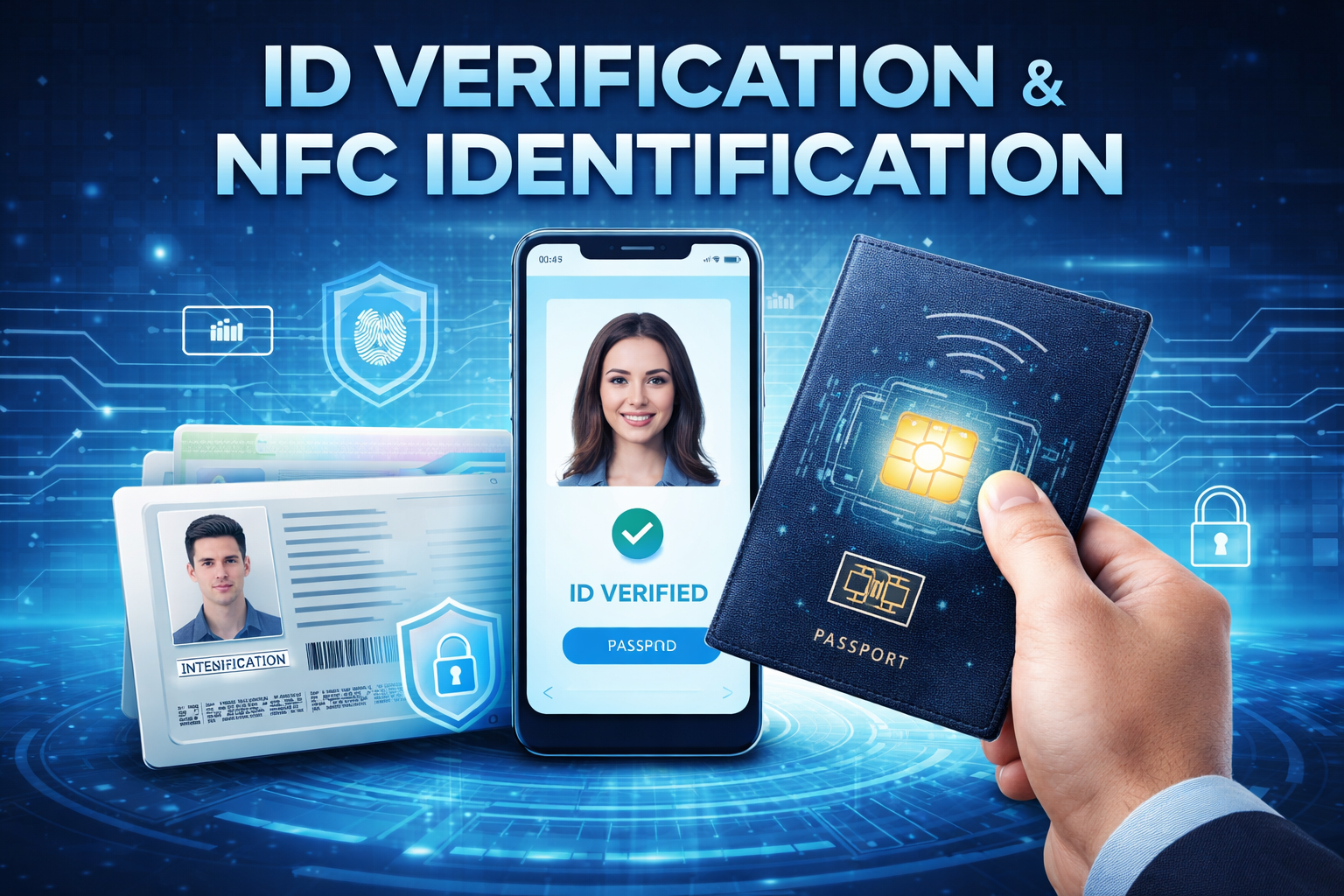
NFC identity verification is an advanced technology that uses Near Field Communication (NFC) to extract encrypted information directly from identity documents such as passports, national IDs, and biometric cards. By simply tapping the document against a smartphone, users can securely share identity information in real time.
This technology ensures that the document is genuine and has not been tampered with. NFC chips contain encrypted personal data that can only be read through authorized systems, making verification highly secure and accurate.
Many industries including banking, fintech, telecom, travel, and healthcare are adopting NFC identity verification to streamline customer onboarding and reduce fraud risks.
Benefits of NFC Identity Verification
Enhanced Security
NFC-based verification reads encrypted data directly from the chip embedded in identity documents. This significantly reduces the chances of fake or forged document submissions.
Faster Customer Onboarding
Customers can complete identity verification within seconds using their smartphones, improving user experience and reducing manual verification time.
Fraud Prevention
NFC technology verifies whether the document is authentic and untampered, helping businesses detect identity fraud more effectively.
Global Compliance
NFC identity verification helps organizations comply with KYC (Know Your Customer) and AML (Anti-Money Laundering) regulations.
What is a Voice Verification System
A voice verification system uses voice biometrics to identify and authenticate users based on their unique vocal characteristics. Every individual has a distinct voice pattern, including pitch, tone, frequency, and speaking style.
The system captures the user’s voice sample and compares it with the stored voiceprint to confirm identity. Since voice patterns are difficult to duplicate, voice verification provides an additional layer of security.
Voice verification systems are widely used in banking, call centers, fintech applications, and remote customer authentication services.
Advantages of Voice Verification Systems
Contactless Authentication
Voice verification allows users to authenticate themselves without physical contact, making it ideal for remote verification processes.
Improved User Experience
Users can verify their identity naturally by speaking, eliminating the need for passwords or OTPs.
Strong Fraud Detection
Modern AI-powered voice verification systems can detect spoofing attempts, recorded audio, and synthetic voices.
Faster Authentication
Voice biometrics reduce authentication time while maintaining high security standards.
Why Businesses Combine NFC Identity Verification with Voice Verification Systems
Combining NFC identity verification with a voice verification system creates a multi-layered security approach. NFC verifies the authenticity of identity documents, while voice biometrics confirms the identity of the actual user.
This combination helps businesses:
- Reduce onboarding fraud
- Improve digital trust
- Enhance customer experience
- Meet regulatory compliance requirements
- Secure remote onboarding processes
As digital transformation continues to grow, NFC identity verification and voice verification systems are becoming essential technologies for businesses seeking secure and seamless identity authentication solutions.

 Arabic
 French
 Spanish
 Portuguese
 Deutsch
 Turkish
 Dutch
Dutch
 Italiano
 Russian
 Romaian
 Portuguese (Brazil)
 Bengali
 Greek
Greek